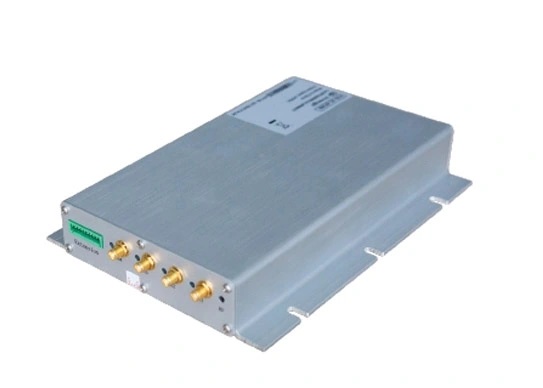
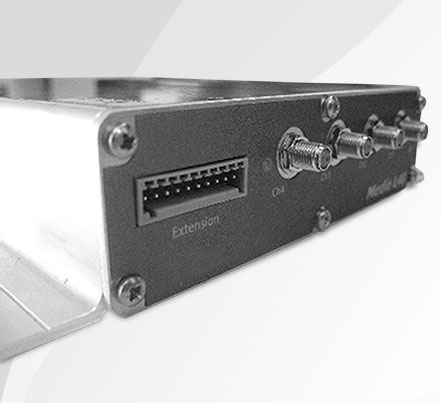
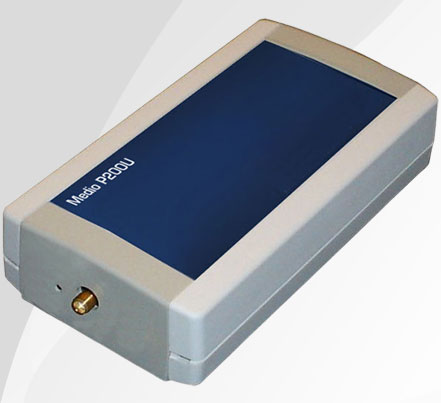
In today’s fast-paced supply chain, accuracy and efficiency are critical to meeting customer demands. The RFID high frequency reader has become an essential tool for ensuring that goods are tracked, identified, and managed in real time. By capturing detailed information from tagged assets, these readers help logistics providers eliminate errors, reduce delays, and increase overall operational visibility. Invengo, as a global leader in RFID and IoT solutions, leverages over 20 years of expertise to deliver advanced high-frequency systems tailored for logistics applications, ensuring precision and reliability across every step of the supply chain.
How RFID High Frequency Readers Improve Operations
The use of an RFID high frequency reader allows logistics companies to track items at multiple checkpoints, whether in warehouses, transit hubs, or delivery centers. Unlike manual tracking methods, RFID readers provide automated and accurate identification without requiring line-of-sight, dramatically increasing speed and efficiency. Invengo’s readers, developed with proprietary technology and certified under ISO 9001 and ISO 27001 standards, are designed to handle large volumes of data, making them especially suited for the scale and complexity of global logistics operations.
Comparing RFID High Frequency Readers and Other Tracking Methods
Traditional barcode systems rely on manual scanning and are prone to errors and inefficiencies. GPS tracking, while useful for vehicles, does not provide item-level accuracy. In contrast, an RFID high frequency reader delivers granular tracking, identifying individual packages and assets within seconds. Compared with low-frequency solutions, high-frequency readers offer faster read speeds and greater memory capacity, which is critical in logistics environments where thousands of items must be processed simultaneously. Invengo stands out by combining this technological edge with decades of experience, having successfully deployed RFID on a national scale for railway systems, a proof of both scalability and reliability.
Driving Visibility and Traceability Across the Supply Chain
One of the biggest challenges in logistics is maintaining real-time visibility. HF RFID reader ensures that goods can be tracked from the point of origin to the final destination. This level of traceability not only reduces losses and theft but also supports regulatory compliance and customer transparency. With Invengo’s use of RFID technology, logistics operators gain a dynamic “smart eye” over their operations, enabling them to make data-driven decisions that enhance efficiency and service quality.
Future Potential of High Frequency RFID in Logistics
The logistics industry is entering an era of digital transformation, where automation and intelligent systems drive competitiveness. An RFID high frequency reader plays a central role in this transition, supporting smart warehouses, automated sorting, and integration with IoT platforms. Invengo’s ongoing innovation, backed by more than 500 patents, positions its solutions at the forefront of this evolution. As logistics networks continue to expand, high-frequency RFID readers will remain the backbone of intelligent tracking, offering unmatched speed, reliability, and scalability for a connected future.
FAQs about High Frequency RFID Reader
Q: What’s the typical read range and performance of HF RFID compared to other RFID frequencies?
A: HF RFID typically has a read range of a few centimeters up to around 1 meter, depending on tag design, reader power, and environment. This range is shorter than Ultra High Frequency (UHF) systems but longer than most Low Frequency (LF) systems. HF is often chosen for secure, close‑proximity applications because it balances read performance with interference tolerance.
Q: What standards and tag types do HF RFID readers support?
A: HF RFID readers operate at 13.56 MHz and are designed to support industry standards like ISO 14443 (used in proximity cards and Near Field Communication, NFC) and ISO 15693 (for vicinity cards used in industrial and asset tracking). These standards determine how the reader and tag communicate and what types of tags can be read or written.