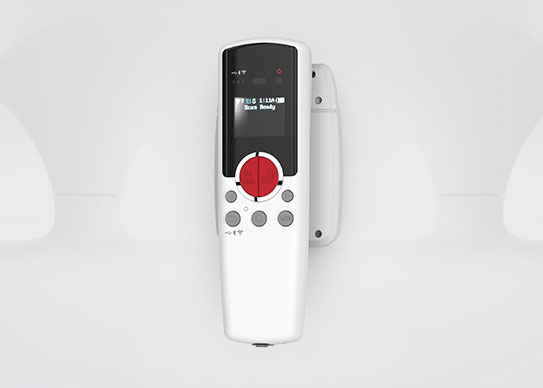
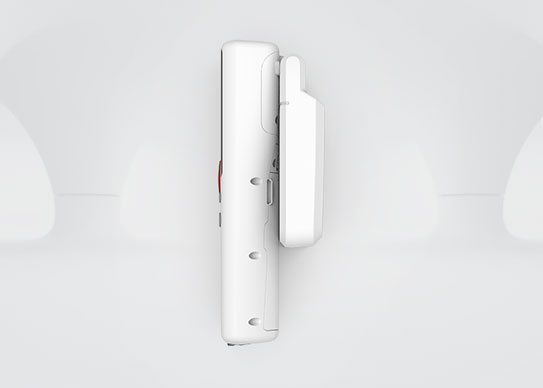
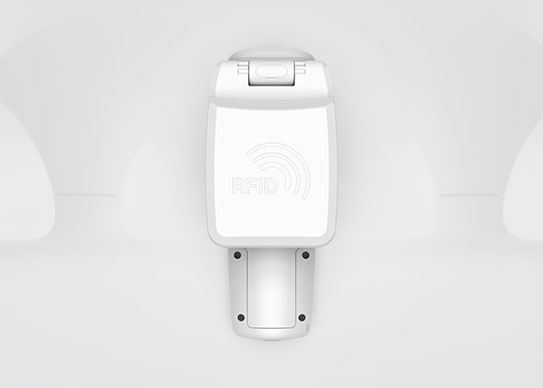
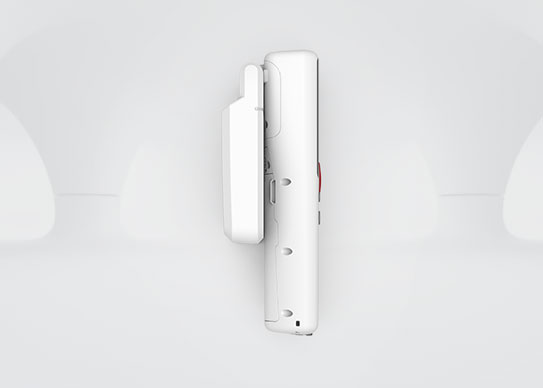
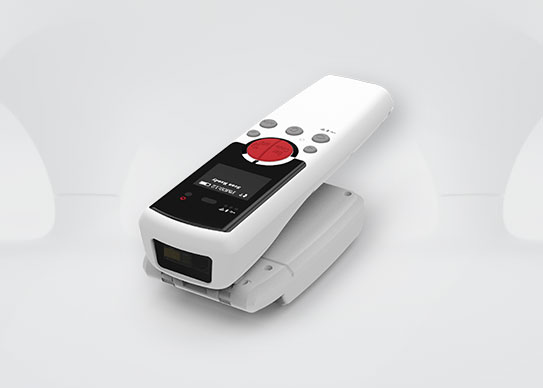
In today's fast-paced industrial and retail environments, efficient asset tracking is critical for maintaining productivity and accuracy. The UHF Bluetooth reader, such as Invengo's XC-AT388, has emerged as a game-changing solution that combines long-range scanning with wireless convenience. By integrating Ultra-High Frequency (UHF) RFID with Bluetooth connectivity, these devices enable workers to perform fast, accurate, and portable inventory management in real time.
What Makes a UHF Bluetooth Reader Essential for Operations?
A UHF Bluetooth reader is a compact, handheld device that wirelessly captures data from RFID UHF tags and transmits it to smartphones, tablets, or warehouse management systems via Bluetooth. Unlike traditional corded scanners, handheld Bluetooth RFID readers provide mobility without sacrificing scanning range or performance. Invengo's XC-AT388, for example, offers an extended reading distance of up to 5 meters, allowing workers to scan tagged items efficiently—whether they're stacked on high shelves or moving along a conveyor belt.
The Advantage of UHF Bluetooth reader vs. Wired RFID Systems
Choosing between Bluetooth-enabled UHF readers and traditional fixed/wired RFID systems depends on operational needs. Fixed RFID readers excel in automated production lines where continuous scanning is required, but they lack mobility and flexibility. In contrast, a Bluetooth UHF reader like the XC-AT388 offers:
Portability – Workers can scan products anywhere in a facility without being tethered to a workstation.
Seamless connectivity – Real-time data transfer to mobile devices, reducing manual entry errors.
Easy integration – Works with iOS, Android, and warehouse management software for streamlined inventory updates.
While fixed systems are ideal for high-volume scanning at choke points, UHF Bluetooth reader provide greater adaptability for dynamic inventory checks and asset tracking.
Key Applications of UHF Bluetooth Reader in Industry
The ability to scan dozens of RFID tags per second wirelessly makes UHF Bluetooth reader invaluable in multiple sectors. Retailers use them to verify stock levels on shelves and reduce out-of-stock incidents. In warehouses, logistic teams rely on Bluetooth RFID scanners for quick pallet audits and receiving/departure verifications. Healthcare facilities benefit from these devices when tracking medical equipment and pharmaceuticals, ensuring compliance and reducing asset loss. The Invengo XC-AT388 is also rugged enough for demanding industrial environments, making it ideal for manufacturers tracking tools, parts, and machinery.
What to Consider When Choosing a UHF Bluetooth Reader
Not all Bluetooth RFID readers deliver the same performance. When evaluating a UHF Bluetooth reader, businesses should consider:
Read range – Some models scan only within a few centimeters, while advanced devices like the XC-AT388 achieve 5+ meters.
Battery life – Long-lasting power ensures all-day operation without frequent recharging.
Bluetooth version – Bluetooth 5.0 or higher ensures stable, low-latency data transmission.
Durability – A rugged, IP54 or higher-rated design withstands drops, dust, and moisture.
Software compatibility – Seamless integration with ERP, WMS, and mobile apps is crucial for real-time data accuracy.
The Future of Wireless RFID Scanning with Bluetooth Technology
As industries shift toward automation and real-time tracking, UHF Bluetooth reader will play an even larger role in supply chain optimization. Future advancements may include AI-powered scanning for error detection and extended-read-range RFID innovations. With compact, wireless, and high-performance models like the Invengo XC-AT388, businesses can reduce manual processes, increase inventory accuracy, and improve operational efficiency.
For organizations seeking a modern, wire-free RFID solution, UHF Bluetooth reader represent the next evolution in asset and inventory management. Visit Invengo's XC-AT388 product page to explore how this device can enhance your tracking operations.