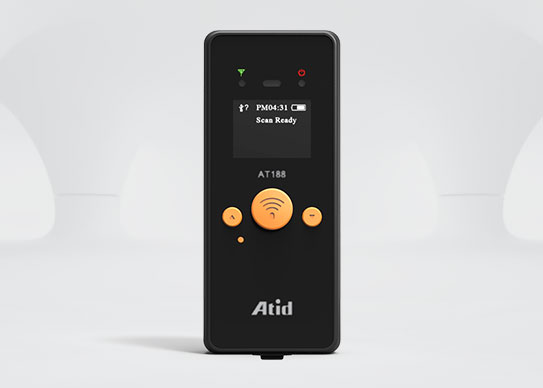
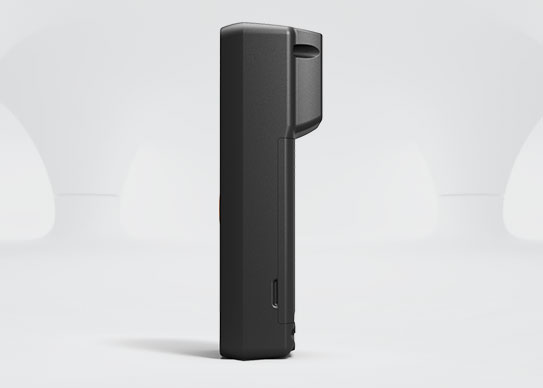
A UHF handheld reader is a portable device designed to capture, process, and transmit data from UHF RFID tags in real time. Unlike fixed RFID systems, handheld readers provide mobility and flexibility, allowing operators to identify and track assets in warehouses, healthcare facilities, transportation hubs, and retail stores. Invengo, a global leader in RFID and IoT solutions, has developed advanced handheld readers that combine lightweight design with powerful performance, offering a reliable solution for industries that require both accuracy and efficiency in data collection.
How Does UHF Handheld Reader Work?
The working principle of a UHF handheld reader is based on electromagnetic wave communication between the device and RFID tags. When the reader emits a UHF signal, the tags within its range respond by transmitting stored data back to the device. The handheld reader processes this information and sends it to a connected system, enabling seamless integration with inventory management or asset tracking software. Invengo handheld readers are equipped with sophisticated antenna technology and optimized software to ensure high-speed reading and stable communication, even in environments where thousands of tags may be present. This makes them especially valuable in logistics and retail, where efficiency and reliability are critical.
Comparing UHF Handheld Readers vs Fixed Readers
While both handheld and fixed RFID readers are used for identification and tracking, their roles and applications differ significantly. The table below highlights key distinctions:
Feature
UHF Handheld Reader
Fixed RFID Reader
Mobility
Portable, can be used anywhere
Stationary, installed at gates or specific areas
Flexibility
Suitable for spot-checking and mobile operations
Best for continuous monitoring and automation
Coverage
Limited to operator’s scanning range
Covers wider, predefined read zones
Typical Use Cases
Retail inventory, field asset tracking, healthcare
Warehousing gates, production lines, transportation hubs
Invengo provides both handheld and fixed RFID readers, giving customers the flexibility to choose depending on their operational needs. The UHF handheld reader offers unmatched adaptability, while fixed readers excel in large-scale automated environments.
UHF Handheld Reader Applications
The versatility of a UHF handheld reader makes it a valuable asset across multiple industries. In retail, handheld readers enable staff to perform rapid inventory checks without interrupting operations. In healthcare, they ensure medical equipment and supplies are accurately tracked to reduce errors and improve patient safety. Logistics companies rely on them for real-time tracking of parcels and assets across different facilities, while in libraries and cultural institutions, they simplify the management of large volumes of items. Invengo’s handheld readers are widely adopted due to their robust design, ability to withstand demanding environments, and integration with broader IoT solutions.
Advantages of Invengo UHF Handheld Readers
Invengo’s handheld readers stand out due to the company’s deep expertise in RFID technology and its track record of delivering large-scale deployments, such as nationwide railway identification systems. Their UHF handheld reader models are developed with ergonomic design for user comfort, extended battery life for long shifts, and powerful processing capabilities for high-volume environments. Additionally, Invengo integrates its readers with advanced software platforms, ensuring that organizations not only capture data but also transform it into actionable insights. By combining hardware and software expertise, Invengo provides businesses with a complete solution for intelligent data collection and management.
FAQ: UHF Handheld Reader
What is the read range of a UHF handheld reader?
Typical read ranges are between 3 to 10 meters, depending on antenna gain, tag type, and environmental conditions. High-performance models can achieve even longer distances in optimized scenarios.
What are UHF handheld readers used for?
They are widely used in warehouse management, inventory control, asset tracking, logistics, retail, and field operations where mobility and real-time scanning are required.
Can a UHF handheld reader connect to mobile or cloud systems?
Yes, most UHF handheld readers support Wi-Fi, Bluetooth, and 4G/5G connectivity, enabling seamless integration with mobile apps, enterprise systems, and cloud-based platforms.
What is the difference between a UHF handheld reader and a fixed RFID reader?
A UHF handheld reader is portable and ideal for flexible, on-site scanning, while a fixed RFID reader is installed in a specific location for continuous, automated tag detection such as in gates or conveyor systems.