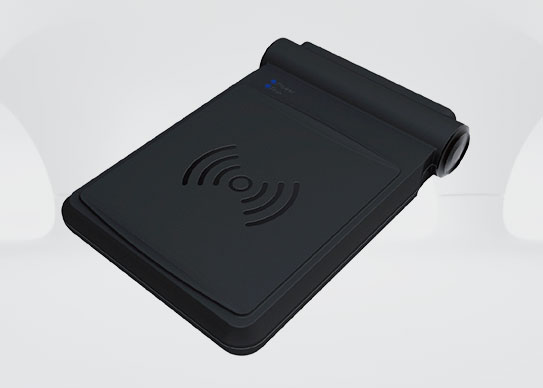
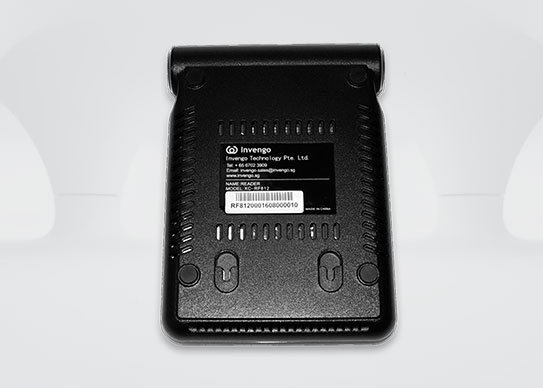
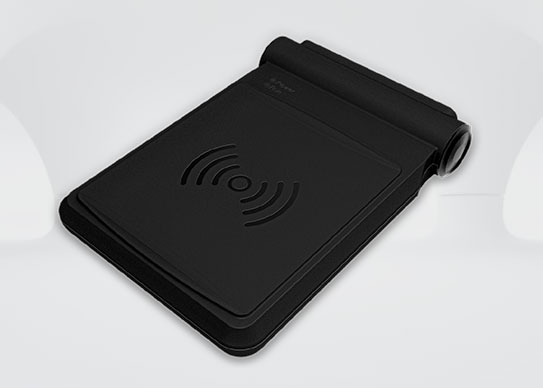
A UHF desktop reader is more than just a compact device—it is a gateway to faster and more reliable data processing in modern industries. Designed to read and sometimes encode UHF RFID tags, these readers are widely used in sectors such as retail, libraries, healthcare, and office environments. By placing tags near the reader’s antenna, organizations can quickly identify, track, or update asset information with minimal effort. Invengo, as a global leader in RFID technology, integrates advanced design and software compatibility into its desktop solutions, ensuring not only high precision but also stable performance across diverse applications.
How UHF Desktop Readers Improve Workflow Efficiency
One of the key advantages of adopting a UHF desktop reader is its ability to simplify workflows that traditionally relied on manual input. For example, in library systems, a desktop reader allows staff to register or return multiple books within seconds by scanning RFID tags embedded in the covers. In retail, it enables rapid product verification during checkout or inventory management, reducing waiting times and operational errors. Invengo’s desktop readers are built with intelligent connectivity, allowing seamless integration with enterprise platforms and creating a smooth flow of information that supports real-time decision-making.
Comparing UHF Desktop Readers and Handheld Readers
While both desktop and handheld RFID readers provide essential functions, their strengths lie in different usage scenarios. The comparison below outlines key differences:
Feature
UHF Desktop Reader
Handheld Reader
Usage Environment
Fixed, ideal for counters, desks, or service points
Mobile, suitable for warehouses, logistics, fieldwork
Ease of Operation
Simple, requires minimal training for staff
Requires handling skills, more dynamic operation
Power Source
Typically USB or external power
Battery powered for mobility
Efficiency
High-speed reading of multiple tags in a controlled space
Flexible scanning across large or complex areas
This comparison shows that a UHF desktop reader excels in fixed-location environments where speed and consistency are priorities, while handheld readers are more suited to mobile, on-the-go scanning tasks. Invengo offers both categories, giving businesses the flexibility to choose according to their operational needs.
UHF Desktop Reader: Data Accuracy and System Integration
The value of a UHF desktop reader extends beyond reading tags quickly; it lies in its ability to maintain accuracy and integrate with existing systems. In healthcare, accurate identification of medical records or equipment reduces risks of human error. In retail, data captured from desktop readers can be instantly linked with ERP or POS systems to ensure inventory accuracy. Invengo’s technology is designed with ISO-certified processes, ensuring that data flows securely and consistently into enterprise software platforms. This level of integration allows businesses to build trust in their data and streamline cross-departmental operations.
Expanding Applications of UHF Desktop Readers
The versatility of the UHF desktop reader has made it indispensable in industries where efficiency and precision are critical. In public transportation, readers can be used to issue or verify smart cards at customer service desks. In cultural institutions such as museums, they help track collections or issue visitor passes. Even in office environments, desktop readers play a role in access management or employee asset tracking. By leveraging its 20+ years of expertise and more than 500 registered RFID patents, Invengo ensures its UHF RFID solutions adapt seamlessly to evolving industry requirements.
FAQs about UHF Desktop Reader
What is the typical read range of a UHF desktop reader?
Most UHF desktop readers are optimized for short-range applications, with a typical read distance of 0–50 cm, depending on antenna design, tag type, and power settings.
What are UHF desktop readers used for?
They are widely used in retail POS systems, library management, document tracking, access control, and product authentication where precise, single-item reading is required.
Can a UHF desktop reader read multiple tags at once?
Yes, UHF desktop readers support anti-collision technology, allowing them to read multiple RFID tags simultaneously within their effective range, improving efficiency in batch processing scenarios.
How do you connect a UHF desktop reader to a computer?
UHF desktop readers typically connect via USB, acting as a plug-and-play device or using dedicated software/SDKs. Some models also support serial communication or virtual COM ports for system integration.